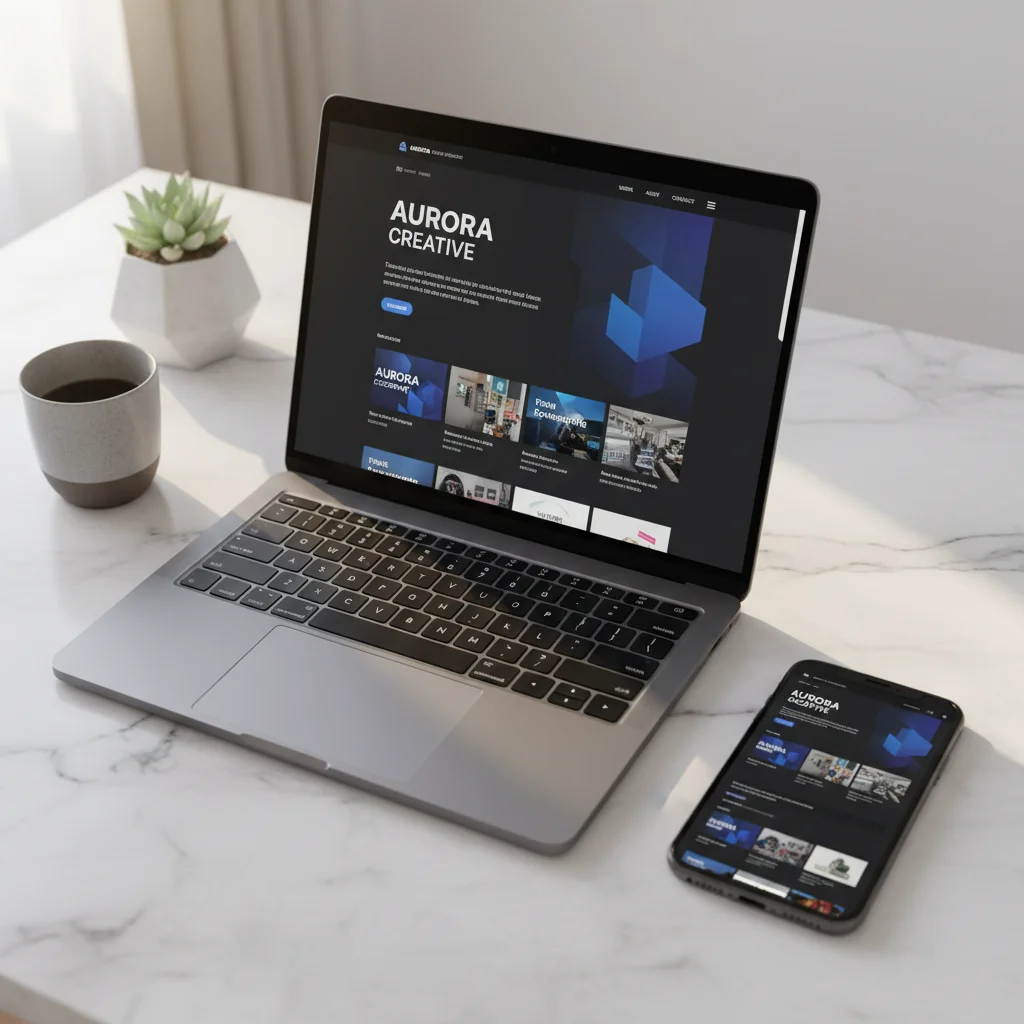
Most contractor websites fall into one of two categories: template disasters that look like they were built in 2007, or overcomplicated agency builds that cost $10,000 and take four months to go live. Neither works.
A good contractor website doesn't need to be fancy. It needs to do one thing well: convince someone to call you instead of your competitor. Here's what actually matters.
1. Load Fast (Or Lose the Call)
Google found that 53% of mobile visitors abandon a site if it takes longer than 3 seconds to load. For service businesses, that's even worse—homeowners searching for an emergency plumber or roofer have zero patience for slow sites.
What slows sites down:
- Page builders like Wix and Squarespace bloat your site with unnecessary code
- Unoptimized images (huge 5MB photos that should be 200KB)
- Too many plugins, tracking scripts, or third-party widgets
- Cheap hosting on shared servers
What speeds sites up:
- Clean HTML and CSS (no bloated page builders)
- Properly compressed images
- Modern hosting (Vercel, Netlify, or good CDN-backed hosting)
- Minimal JavaScript
Your website should load in under 2 seconds. Anything slower and you're losing calls. Test your current site at PageSpeed Insights—if your mobile score is below 80, you have a problem.
2. Make Your Phone Number Impossible to Miss
Your phone number should be visible in the header on every page. Not hidden in a footer. Not buried in a contact form. Front and center.
On mobile, it should be a click-to-call button. No one wants to copy and paste your number. One tap should dial.
If someone has to hunt for your contact info, they'll leave and call the next contractor.
3. Show Real Work, Not Stock Photos
Stock photos scream "I don't have real work to show." Homeowners can spot them a mile away, and they kill trust instantly.
What to show instead:
- Before-and-after photos of actual jobs you've completed
- Your truck, your team, your tools
- Real projects in real homes (with customer permission)
Even smartphone photos are better than stock images. Authenticity matters more than professional photography.
4. Say What You Do (In Plain English)
Your homepage should answer three questions in the first 10 seconds:
- What do you do? ("We fix roofs" not "We provide comprehensive residential exterior solutions")
- Where do you work? ("Serving Austin and surrounding areas")
- How do I contact you? (Big phone number, clear CTA)
No one cares about your company mission statement or your commitment to excellence. They care about whether you can fix their problem and if you serve their area.
The 5-second test: Show your homepage to someone who's never seen it. Give them 5 seconds. Then ask: "What does this company do and where are they located?" If they can't answer, your messaging is broken.
5. List Your Services Clearly
Don't make people guess what you offer. List your services as actual text on the page—not buried in a dropdown menu or hidden behind images.
Good example:
- Residential Plumbing
- Emergency Repairs
- Water Heater Installation
- Drain Cleaning
- Leak Detection
This also helps with SEO. Google can't rank you for services you don't mention on your site.
6. Mobile-First Design (Not an Afterthought)
Over 70% of local searches happen on mobile. If your site looks terrible on a phone, you're invisible to most of your potential customers.
Mobile design basics:
- Text should be readable without zooming
- Buttons and links should be big enough to tap
- No horizontal scrolling
- Phone number should be a tap-to-call button
- Forms should be short and easy to fill out on a small screen
Google uses mobile-first indexing, which means they rank your site based on the mobile version. If it's broken on mobile, your SEO is broken.
7. Social Proof (Reviews and Testimonials)
Homeowners trust other homeowners more than they trust you. Show them that real people have hired you and been happy.
Where to display reviews:
- Embed Google reviews on your homepage
- Add a testimonials section with customer quotes
- Include before-and-after photos with short reviews
- Link to your Google Business Profile
If you only have a handful of reviews, focus on getting more before launching a new website. A site with no social proof is a red flag.
8. Trust Signals (Licenses, Insurance, Certifications)
Service businesses operate in people's homes. That's inherently risky. Your website needs to prove you're legitimate.
Trust signals to include:
- State contractor license number
- Years in business
- Insurance and bonding info
- Industry certifications
- Better Business Bureau rating (if you have one)
- Professional associations
These details reassure visitors that you're not a fly-by-night operation.
9. Simple, Functional Contact Forms
Contact forms should ask for the minimum info you need to follow up: name, phone number, service needed. That's it.
What kills conversions:
- Forms that require 15 fields before submitting
- Dropdowns with 50 options
- CAPTCHAs that make you identify traffic lights
- Forms that don't work on mobile
Every extra field you add reduces the chance someone will submit. Keep it short.
10. Clear Call-to-Action
Every page should tell visitors what to do next. "Call Now" or "Get a Free Quote" should be visible above the fold (the part of the page you see without scrolling).
Don't give people 10 choices. One primary action per page. Make it obvious.
What Doesn't Matter (But Agencies Will Charge You For)
A lot of web design trends are just that—trends. They don't drive calls. Here's what you can skip:
- Fancy animations that slow your site down
- Video backgrounds that auto-play and annoy visitors
- Complicated menus with dropdowns and mega-menus
- Custom illustrations when real photos work better
- Chat widgets that pop up immediately and interrupt browsing
Good design is invisible. It gets out of the way and makes it easy for people to hire you.
Get a Landing Page That Actually Converts
$300 one-time. Fast, mobile-optimized, built to get you calls. Free hosting forever.
Start Free Trial →The BizWebFix Approach
Every landing page we build follows these principles: fast load times, mobile-first design, clear messaging, and real CTAs. No bloat, no stock photos, no overcomplicated features.
We focus on what actually drives calls: speed, clarity, and trust. That's it. For $300 one-time, you get a site that works—not one that sits on a designer's to-do list for three months.